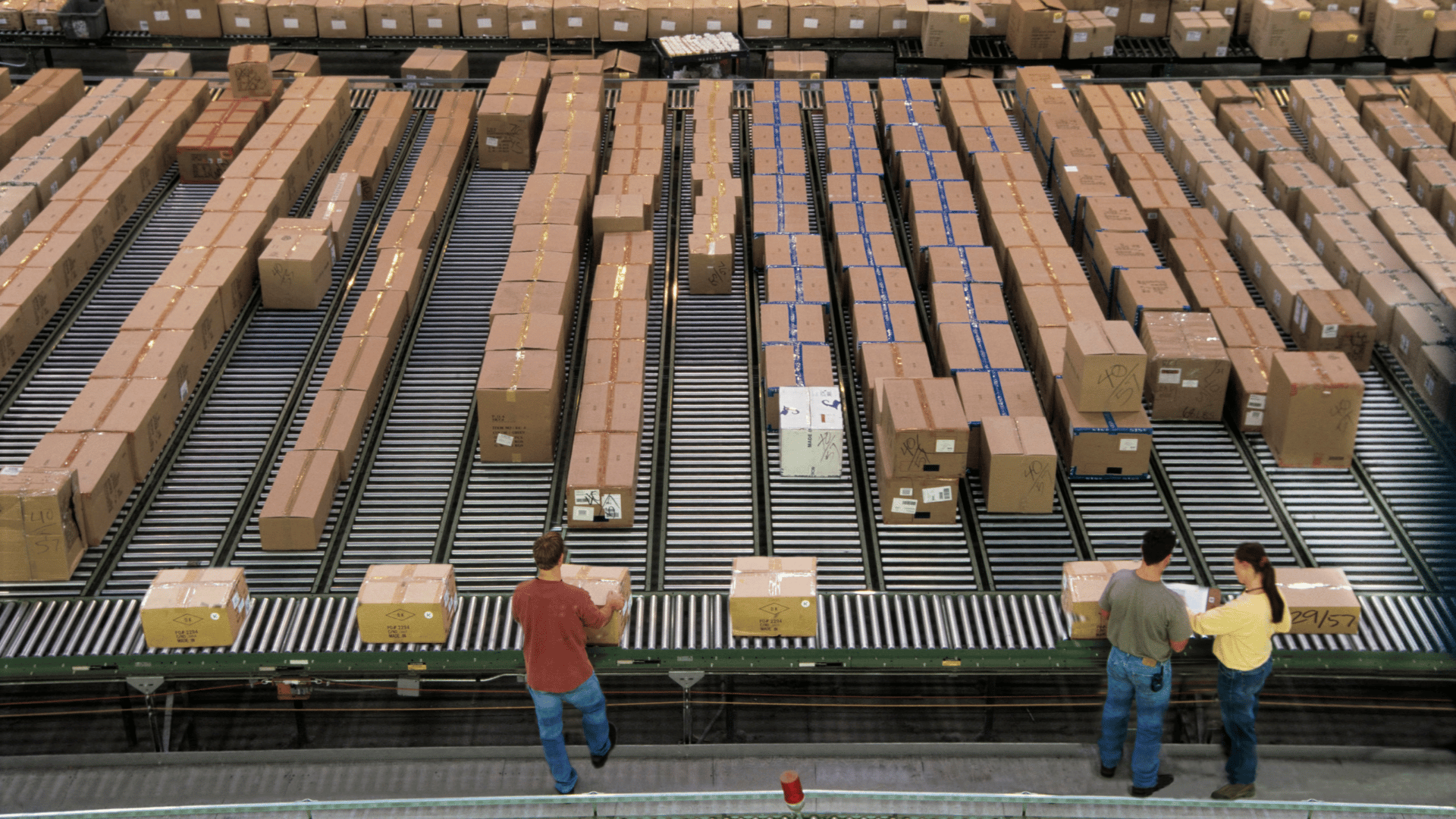
The Dutch economy is in really good condition – stable, growing and searching for new employees. A GDP growth at the level of 1.8 percent year-on-year was recorded (value 1.179 trillion euro), and the sector of employees increased by 130 thousand new people. In addition, household consumption was growing through all four quarters, so the market indicates high demand of sales and services. This also means an unceasing demand for further employees.
Table of contents:
- GDP of the Netherlands in 2025 and Q1 2026: stable growth with growing consumption
○ What does GDP growth mean for the labour market? - Employment is growing: 10.3 million workers and 130 thousand new positions in 2025
- Wages are growing faster than inflation: +6.2 percent in 2025
- Production sector under pressure: employment is falling despite a growing economy
- How Intraservis B.V. connects Dutch companies with workers ready to work
- FAQ
GDP of the Netherlands in 2025 and Q1 2026: stable growth with growing consumption
The year 2024 was difficult for the Dutch economy, but as CBS indicates, the state of things in 2025 improved. GDP increased by 1.8 percent year-on-year – clearly better than in 2024, when growth amounted to only 1.1 percent. The value of GDP in absolute terms reached 1 179 billion euro in the whole 2025 year, and the first quarter of 2026 itself brought GDP at the level of 296.6 billion euro.
Another good information is the fact that the growth was not a one-time spike. It accelerated consistently through the whole year, which is indicated by concrete numbers. What is important, the growth was not a one-time effect – it accelerated consistently through the whole year. In the first quarter of 2025 GDP was growing by 2.1 percent, which was the best result from several quarters. In the next three quarters the growth remained at the level of 1.6-1.8 percent.
Household consumption was growing through the whole year at the pace of 1.5-1.8 percent quarterly, which means that the Dutch were spending more and their wealth was really growing. This is confirmed by forecasts of De Nederlandsche Bank (DNB), which in autumn 2025 raised estimates of GDP growth for the whole year from 1.1 to 1.7 percent, assessing the results of the Dutch economy as “remarkably higher than expected”.
What does GDP growth mean for the labour market?
It could seem that GDP growth of 1.8 percent is not much. This is of course a wrong impression – in reality it means more orders in factories, more parcels in warehouses, more construction sites and more goods to be loaded. Each percentage point of economic growth translates into concrete jobs in physical sectors, which cannot operate without people.
And the Dutch labour market is already close to the limits of its absorption: according to DNB, more than 76 percent of people at the age of 15-74 are already professionally active – one of the highest participation indicators in the whole Europe. When the economy grows, and local candidates almost do not exist, companies must search for workers outside the borders.
Employment is growing: 10.3 million workers and 130 thousand new positions in 2025
It is exactly employees – employed by companies on contracts – that constitute the pillar of the Dutch labour market and the biggest area of demand for candidates from abroad. The recorded growth is a clear information that Dutch enterprises are employing, expanding teams and searching for workers, which the local market is no longer able to deliver.
In the first quarter of 2026 total employment amounted to 10.228 million people, which is 15 thousand less than a year earlier. It could constitute a contradiction with earlier sentences, however it is necessary to be precise. It is a natural seasonal fluctuation at the beginning of the year, which does not change the structural trend. The segment of employees in Q1 2026 was still higher by 97 thousand than in Q1 2025, which confirms the durability of employment growth in the sector of enterprises.
For Dutch employers this dynamic has a concrete meaning. A growing economy requires growing teams, but the pool of local candidates is exhausted. According to CBS already two thirds of Dutch companies report difficulties with obtaining workers – and in construction this share exceeds 80 percent.
Wages are growing faster than inflation: +6.2 percent in 2025
Data of CBS indicates that in 2025 total employee compensation increased by 6.2 percent year-on-year. Wages and salaries (wages and salaries) were growing by 6.0 percent. Annual compensation per full-time position (compensation per FTE) amounted to 79.8 thousand euro – compared to 76.1 thousand euro in 2024. This means an increase by 3.7 thousand euro per position within one year.
The dynamics of wage growth remained high through the whole 2025 year, although it slowed down slightly compared to 2024. In the first quarter of 2025 employee compensation was growing by 6.0 percent year-on-year, in the second by 6.0 percent, in the third by 6.6 percent and in the fourth by 6.3 percent. For comparison, in 2024 compensation growth amounted from 7.0 to 7.8 percent quarterly, and in the whole year 7.3 percent.
For workers from Poland, Ukraine and other countries of Central Europe these numbers are a very concrete information: Dutch wages are growing significantly faster than inflation and significantly faster than in the majority of countries of the region. The total number of jobs of employees in 2025 amounted to 9 194 thousand – by 1.5 percent more year-on-year. The market pays more and has more jobs to be filled.
In the first quarter of 2026 the number of positions of employees amounted to 9 189 thousand, by 1.1 percent more year-on-year. Data about wage dynamics for Q1 2026 is not yet available in published CBS tables.
Production sector under pressure: employment is falling despite a growing economy
Data of CBS for the production sector (Manufacturing, C) shows a worrying trend, which directly explains why Dutch production companies search for workers abroad. In 2025 total employment in the production sector amounted on average to 751 thousand people – by 8 thousand less than in 2024. In individual quarters: minus 5 thousand year-on-year in Q1, minus 6 thousand in Q2, minus 16 thousand in Q3 and minus 13 thousand in Q4.
The trend deepened in the first quarter of 2026: employment in production amounted to 746 thousand – by 16 thousand less than in Q1 2025. This means that through four consecutive quarters the Dutch production sector was losing workers at the pace from 6 to 16 thousand per quarter.
At the same time wages in the production sector were growing: by 6.1 percent in the whole 2024 year and by 4.4 percent in 2025, while quarterly data shows increases from 3.1 to 5.2 percent. Companies pay more, and workers are still decreasing. This is a classic signal of structural labour shortage – not a financial crisis of the sector, but exhaustion of the local pool of candidates.
The number of jobs in production in 2025 amounted to 723 thousand – practically without change year-on-year. In Q1 2026 it fell to 722 thousand, by 0.2 percent below the level from a year earlier. Companies maintain positions, but have an increasingly bigger problem with filling them with workers from the local market.
How Intraservis connects Dutch companies with workers ready to work
Data of CBS for 2025 and Q1 2026 compose into a consistent picture: the Dutch economy is growing (GDP +1.8 percent), companies employ more employees (+130 thousand year-on-year), wages are growing faster than inflation (+6.2 percent) – but the production sector loses workers quarter after quarter, despite growing wages.
The local labour market is not able to deliver a sufficient number of candidates to physical sectors. This is a structural gap, not a temporary fluctuation.
Intraservis specializes exactly in the area where this pressure is the biggest: production, logistics, construction, food processing. Recruiting workers from Poland, Ukraine and other countries of Central Europe, the agency delivers Dutch companies proven candidates ready to work – at the moment when the local market does not have them.
The key advantage of Intraservis is the comprehensiveness of service. Organization of accommodation in proximity of the workplace makes that the worker is ready to the first shift without logistical delays. Support in administrative formalities – BSN number, registration, health insurance – eliminates barriers, which often block foreign employment. Flexible models of cooperation, from seasonal contracts to long-term employment, allow companies to adjust the level of employment to real demand.
The growth of wages in the Netherlands by 6.2 percent yearly is an excellent information for workers considering departure – the real purchasing power of earnings is growing, and annual compensation per position is approaching 80 thousand euro. For employers this is a signal that the wage market is becoming more and more demanding and that a good candidate delivered by an efficient agency is a real operational advantage over competition, which still searches with methods from a decade ago.
FAQ
How did GDP of the Netherlands grow in 2025? According to data of CBS, GDP of the Netherlands increased in 2025 by 1.8 percent year-on-year, reaching value of 1 179 billion euro – compared to 1 122 billion euro and growth of 1.1 percent in 2024. Growth of GDP remained consistently through all four quarters, from 2.1 percent in Q1 to 1.8 percent in Q4.
How much employment amounted in the Netherlands in 2025? Total number of working people amounted in 2025 to 10 316 thousand people, by 50 thousand more than in 2024. The segment of employees grew by 130 thousand year-on-year to the level of 8 642 thousand positions. The total number of jobs amounted to 11 651 thousand.
By how much did wages grow in the Netherlands in 2025? Total employee compensation increased by 6.2 percent year-on-year, and wages and salaries by 6.0 percent. Annual compensation per position amounted to 79.8 thousand euro compared to 76.1 thousand euro in 2024 – increase by 3.7 thousand euro within one year.
What is happening with employment in the production sector? The production sector in the Netherlands loses workers despite a growing economy. In the whole 2025 year employment in production amounted on average to 751 thousand people – by 8 thousand less than a year earlier. In Q1 2026 it fell to 746 thousand, by 16 thousand below the level from a year earlier. At the same time wages in the sector were growing by 4.4 percent in 2025, which indicates a structural shortage of candidates, not a financial crisis of the sector.
How does Intraservis help Dutch companies? Intraservis recruits workers from Poland, Ukraine and other countries of Central Europe for Dutch production, logistics and industrial companies. The agency offers organization of accommodation, support in administrative formalities (BSN, insurance, registration) and flexible employment models – from seasonal contracts to long-term agreements.