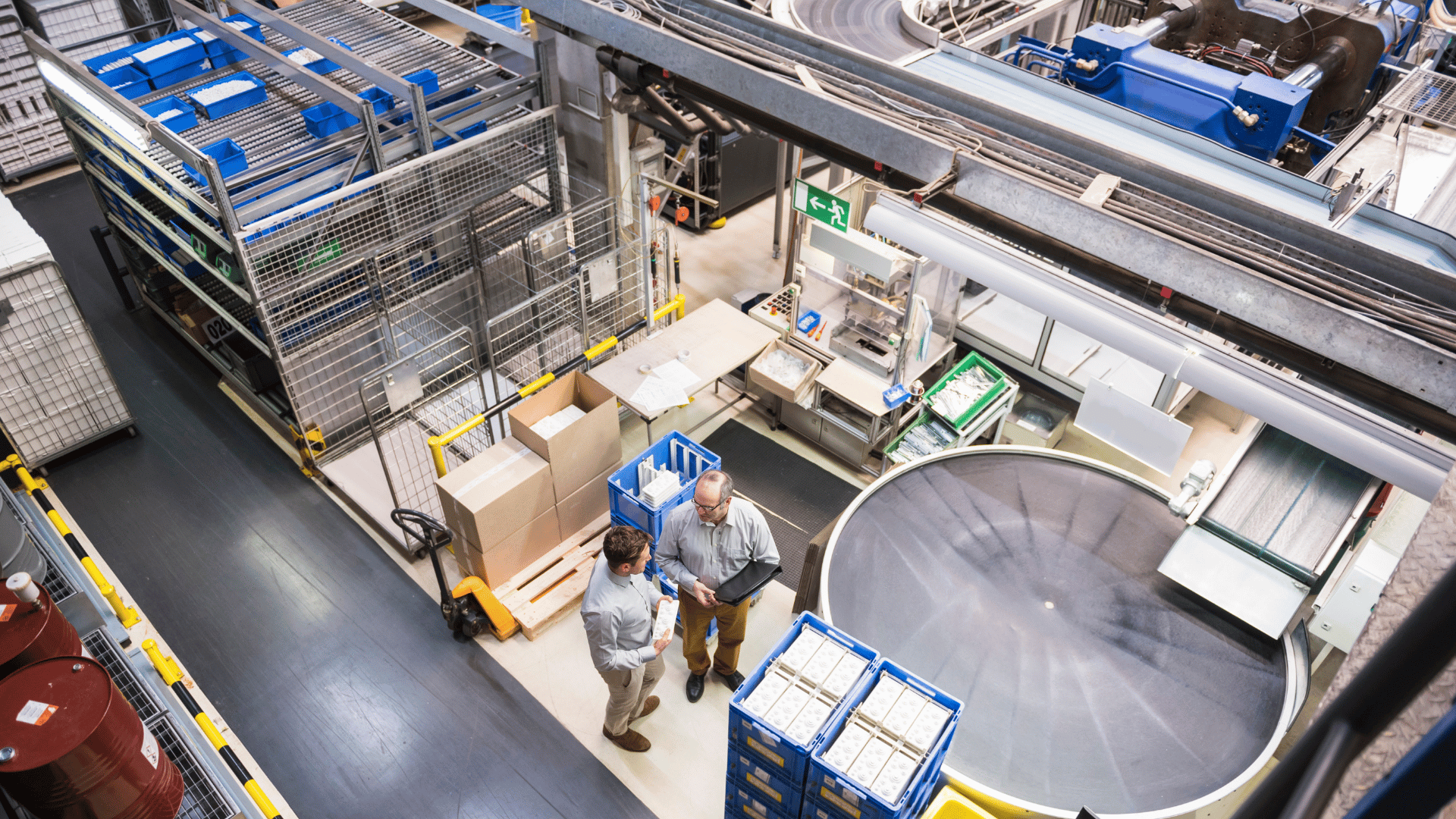
The future is today, and the actions of Dutch companies show this clearly. As a way of dealing with staff shortages, they have chosen to invest in automation. This does not mean, however, that the demand for people is disappearing. Repetitive tasks are increasingly being automated, but at the same time the structure of teams is changing. People are often required to develop new skills, while additional staffing is becoming even more important. From a workforce planning perspective, it is not about choosing between people and technology, but about combining both elements effectively.
In this article
- How staff shortages are driving automation
- Automation and the continuing demand for temporary workers
- Automation in manufacturing and logistics: where people are still needed
- New skills for temporary workers in automated processes
- Seasonal workers as support during peak demand
- Workforce planning: combining automation with flexible staffing
- FAQ
1. Staff shortages are accelerating automation
June data from CBS shows that as many as 64% of companies in the Netherlands are facing staff shortages. Their response to this problem is to invest in technology.
Looking back at the April data, we can see that as many as 29.7% of all surveyed companies increased automation, for example through robots or AI support. These measures are intended to reduce the impact of staff shortages.
In June 2026, CBS reported that 64% of companies in the Netherlands were experiencing staff shortages.
CBS notes that the direction taken by companies is clearly changing:
“Almost two-thirds of firms are experiencing staff shortages, and most are now turning to automation as a means of addressing this issue.”
The change is also visible in sectors that are particularly important from the perspective of temporary work. The share of manufacturing companies increasing automation in response to staff shortages rose from 25.4% in 2025 to 29.1% in 2026. In transportation and storage, the figure increased from 25.4% to 27.9%.
These developments show that automation is no longer purely a technology project, but is increasingly becoming part of the response to limited worker availability.
2. More automation does not automatically mean lower demand for people
It is a mistake to assume that the more processes machines take over, the smaller the problem of access to workers will become. Their number may indeed decrease to some extent, but the data shows a more complex picture.
In July 2026, as many as 32.8% of Dutch companies indicated that staff shortages were the biggest barrier to business growth. In transportation and storage, this applied to as many as 40.9% of companies, compared with 30.4% in HoReCa, 26.6% in manufacturing and 25.6% in agriculture, forestry and fishing.
The data come from the latest CBS Business Survey Netherlands for the third quarter of 2026.
This means that companies may still struggle to fill vacancies despite continuously automating their processes.
The reason seems simple: automation most often takes over specific tasks rather than the entire process previously performed by people. An automated production line can reduce the number of workers needed for one activity, but there are still tasks around it that require monitoring, responding to irregularities, handling non-standard situations or replenishing materials.
Automation therefore more often changes the demand for workers than eliminates it completely.
3. Which tasks can be automated, and where are people still needed?
Automation sounds attractive and modern, but its possibilities are limited. Not only because of technological solutions, but also because of the company itself. This includes the type of facility, volume, type of product and repeatability of the process. To put it simply, warehouse automation will look different in a logistics centre than automation in a hotel.
However, a similar division can be observed in many companies:
| Example task | Automation potential | Where are people still needed? |
| Repetitive product sorting | High | Handling exceptions and checking accuracy |
| Internal transport | High on repetitive routes | Non-standard movements, loading, responding to disruptions |
| Standard packaging | Medium or high | Repacking, non-standard orders, corrections |
| Quality control | Partial | Assessing ambiguous cases and making decisions |
| Material replenishment | Depends on the process | Responding to changing production-line demand |
| Sudden increase in volume | Limited by existing capacity | Rapidly increasing staffing at selected points in the process |
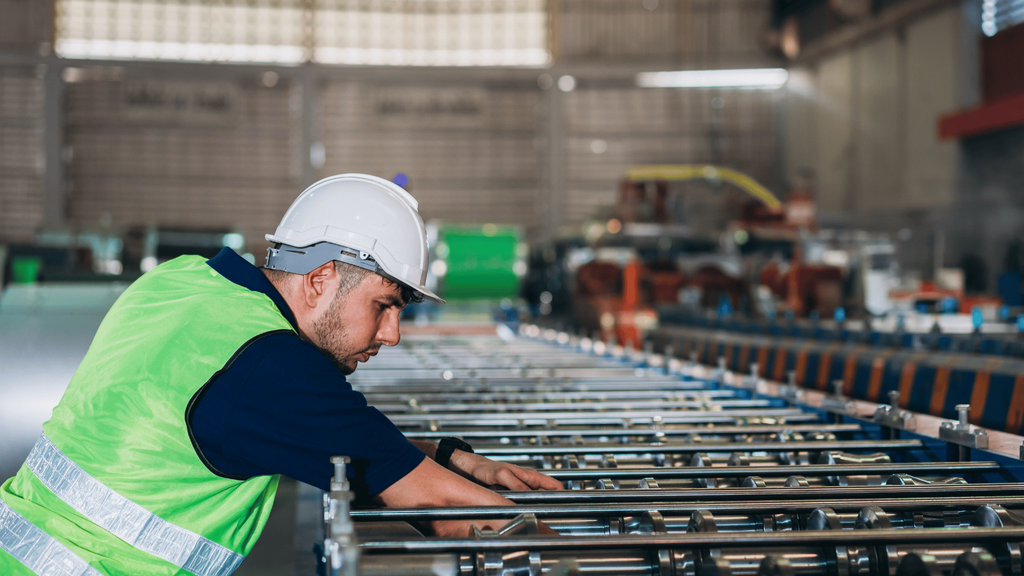
In manufacturing, industrial automation can take over selected repetitive processes, while workers may still be needed to replenish materials, check products or handle the final packaging stage. In logistics, they may be people dealing with returns, non-standard shipments, loading or problematic orders.
Food processing, tasks requiring product inspection and a response to changes on the production line remain important. In agriculture, automation can support selected processes, but high product variability and seasonality still leave room for human work. In HoReCa, technology can take over some ordering or administrative tasks, but it is much more difficult to replace physical guest service, kitchen work or preparing a facility.
4. Automation also changes the worker profile
It is worth remembering that technological changes do not only affect the number of people required. They also change the requirements that a company has for its workers.
When the most repetitive tasks are performed by a machine, the worker may more often be responsible for monitoring the process or responding to situations that have not been handled automatically.
Although the above may sound highly technical and specialised, in reality it often is not. In many cases, the best candidate for the position will be someone who can learn to work within a specific process, follow procedures and respond correctly to basic system messages.
The changes will therefore also affect the onboarding of temporary workers. Short training that prepares a person to work with a specific system or tools used at the facility will become even more important.
Automation can therefore reduce the importance of previous experience for some simple tasks while increasing the value of the ability to learn, accuracy and the ability to respond correctly to deviations from the standard process.
5. Peak season still requires additional capacity
And although it may sound strange, automation has another limitation: every designed system has a specific capacity. Machines may not need to sleep, but the issue lies elsewhere.
Imagine a warehouse that introduces warehouse automation for part of its picking process. During normal periods, this makes it possible to reduce the number of people performing repetitive product movements. During a seasonal peak, however, the number of orders increases rapidly. Along with it comes a higher number of returns, non-standard shipments, exceptions, additional packaging and work at the outbound stage.
Companies then have to make a choice: continue investing in automation that will mainly be needed for just a few weeks of the year, or temporarily increase staffing in those parts of the process where people can still increase capacity.
Not every investment in technology is economically justified. For example, it may be unnecessary if the additional capacity is required only seasonally. In the same way, there is little point in maintaining a larger permanent workforce throughout the entire year when seasonal workers are only needed during specific periods.
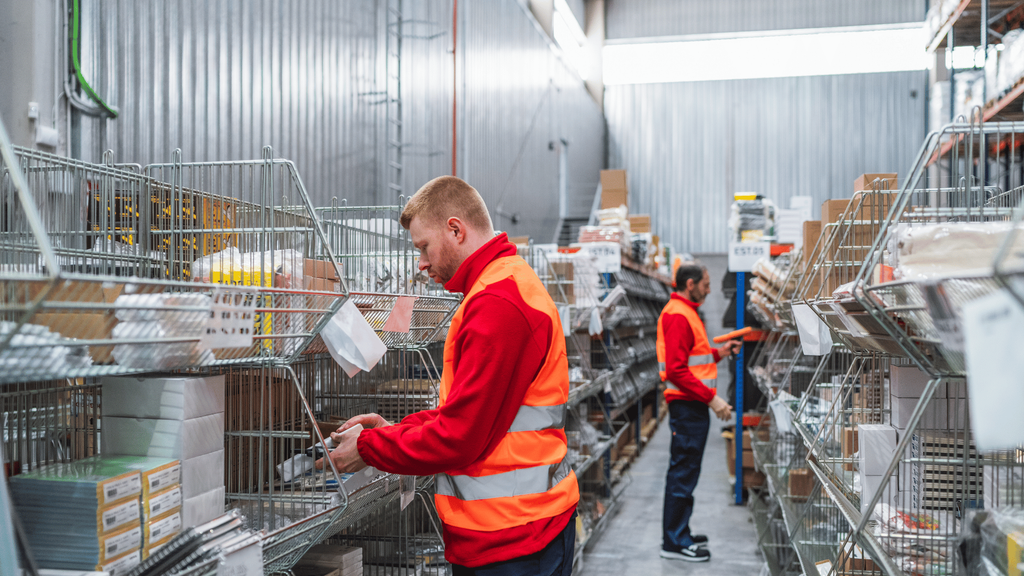
In our view, promoting only one solution can do more harm than good. We believe that automation and temporary staffing can work together. The key is to separate permanent demand from periodic increases.
6. Automation and flexible employment can grow at the same time
Data from the Dutch labour market shows that the growth of automation is not taking place alongside the disappearance of flexible forms of employment.
In the first quarter of 2026, there were 2.7 million flex workers in the Netherlands. This was 63,000 more than a year earlier, and growth was recorded for the third consecutive quarter. This only confirms that increasing automation and a growing number of temporary workers can go hand in hand.
Companies invest in technology to increase productivity and reduce the impact of staff shortages, while at the same time they still need the ability to quickly adjust the size of their teams to the volume of work.
That is why workforce planning increasingly requires companies to determine:
- which activities should be taken over by technology,
- where people still add the greatest value,
- which positions are needed throughout the year,
- and where demand occurs mainly during peaks, seasons or sudden increases in orders.
At Intraservis, as a temporary employment agency, we focus precisely on the part of this process that concerns people. If a company needs to temporarily increase its team in manufacturing, logistics, processing, horticulture or HoReCa, we can help recruit and organise additional staffing tailored to actual demand.
This balance between permanent capacity, technology and flexible staffing is becoming an increasingly important part of strategic workforce planning.
Automation does not therefore have to mean choosing between machines and workers. A well-planned model can use technology where it provides the greatest efficiency and flexible staffing where the process still requires people or a rapidly changing number of workers.
FAQ
Does automation reduce the demand for temporary workers?
Yes, but the answer is not that simple. Automation works best for specific and repetitive tasks, but it does not necessarily reduce the need for a flexible workforce. As automation develops, new responsibilities may emerge that require additional people to be hired.
In which sectors does automation have the greatest impact on temporary work?
There is significant potential in manufacturing and logistics, among other sectors. Industrial automation and warehouse automation are developing quickly, while automation is also expanding in food processing, agriculture and HoReCa. However, the nature of the work means that the extent to which human labour can be replaced varies considerably.
Can temporary workers work with automated processes?
Definitely. However, in many cases they need appropriate preparation. Depending on the task, training may be required in the use of a particular device or system, health and safety procedures, or how to respond to errors.
When can temporary staffing complement automation?
Using temporary workers is an excellent solution for seasonal demand or short-term increases in workload. This is especially true when covering additional demand by increasing technological capacity or permanent employment would not be economically viable. Additional staffing can then be directed to those parts of the process where people still increase its capacity.